Sinus Infection

Sinus Infection Symptoms and Treatment: How to Recognize and Manage Chronic Sinusitis

📅 February 2, 2026✍️ Amanda R. Newman ⏱ 10 min read

Sinus infections can make you feel miserable. Stuffy nose, pressure in your face, thick mucus, headache, maybe even trouble sleeping. A lot of people just power through and hope it goes away, but understanding what is going on inside your sinuses can actually help you heal faster and avoid long term problems.

In this guide, we will walk through:

  • What a sinus infection is
  • The most common sinus infection symptoms
  • How chronic sinusitis is different
  • How anti inflammatory treatments and habits can help
  • When to see a doctor

This is general information, not personal medical advice. If you are really struggling or your symptoms are getting worse, it is important to talk with a healthcare professional.

What Is a Sinus Infection (Sinusitis)?

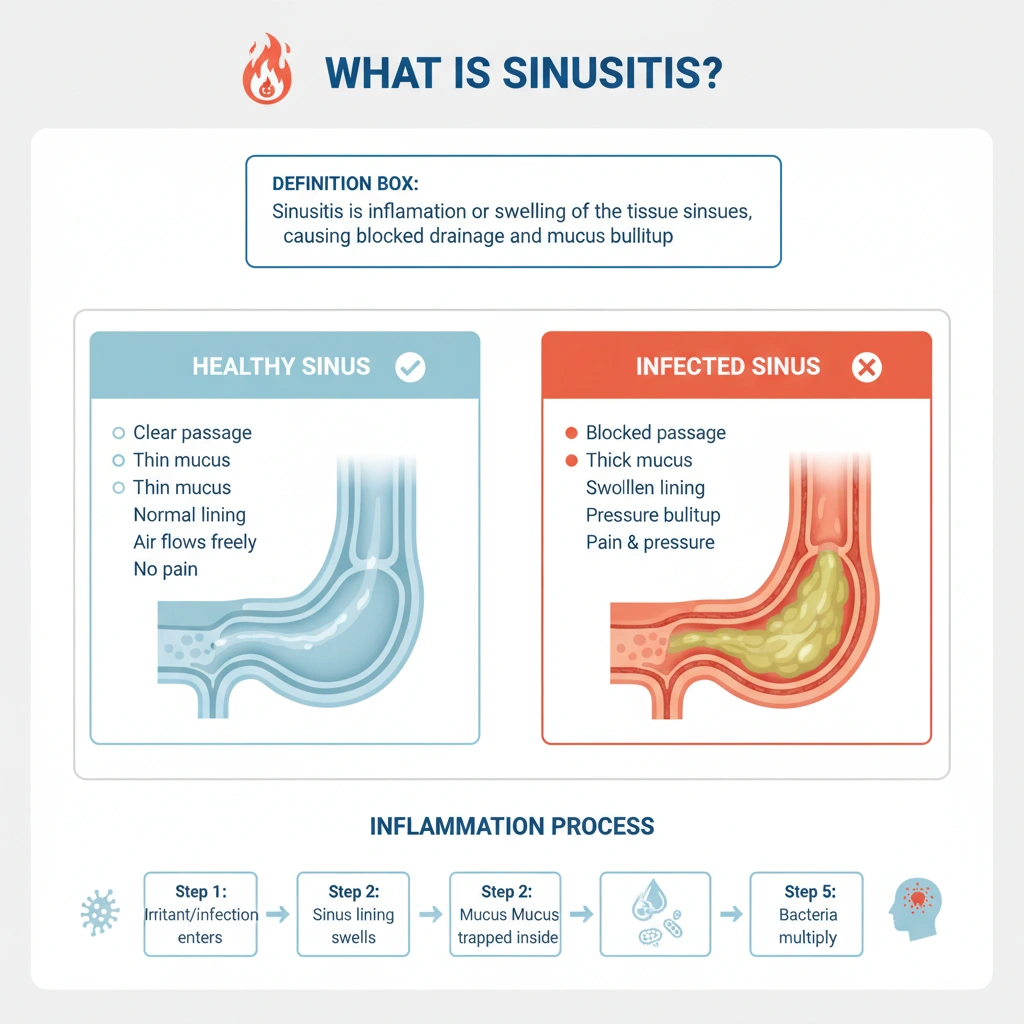
A sinus infection, or sinusitis, happens when the tissues that line the sinuses become swollen and irritated. The sinuses are small air filled spaces behind your forehead, cheeks and nose. They normally drain mucus smoothly. When they get inflamed, that drainage slows down or stops.

That trapped mucus is a perfect place for germs to grow, which can lead to more inflammation and more symptoms.

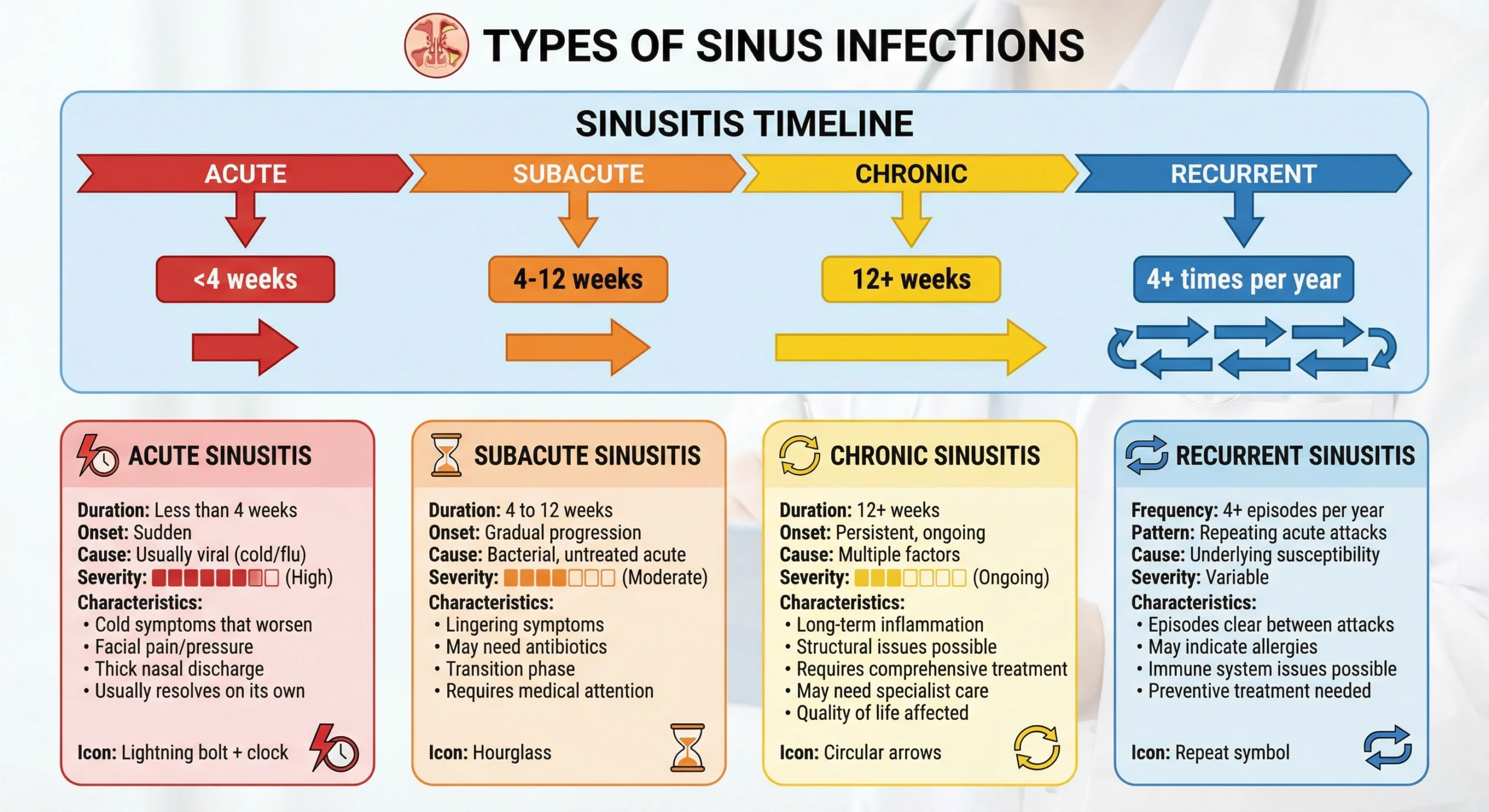
Acute vs chronic sinusitis

You will often hear two terms:

Acute sinusitis

  • Short term
  • Usually lasts less than 4 weeks
  • Often starts after a cold or flu

Chronic sinusitis

  • Long lasting
  • Symptoms go on for 12 weeks or more
  • Can keep coming back in cycles

Both are types of sinus infection. The big difference is how long the inflammation and sinusitis symptoms stick around.

Common Sinus Infection Symptoms

Not every person has the exact same sinusitis symptoms, but several patterns are very common.

Typical sinusitis symptoms to watch for

Here are some of the most frequent sinus infection symptoms:

  • Stuffy or blocked nose

It feels like you cannot breathe well through your nose.

  • Thick nasal discharge

Often yellow or green mucus, sometimes with a bad smell or taste.

  • Pain or pressure in the face

Around the eyes, cheeks, forehead or upper teeth. It can feel heavy or achy.

  • Headache

Often worsens when you bend forward.

  • Reduced sense of smell or taste

Food does not taste like it usually does.

  • Postnasal drip

Mucus drips down the back of your throat, which can cause coughing or throat clearing.

  • Sore throat or cough

Especially at night, from that postnasal drip.

  • Feeling tired and unwell

Low energy is common with sinus infections.

You might also notice mild fever or bad breath. If you are ever unsure whether it is just allergies, a cold or a sinus infection, a doctor or pharmacist can help sort that out.

Signs it might be chronic sinusitis

Chronic sinusitis is more than a short cold that hangs around a bit too long. Red flags include:

  • Sinusitis symptoms lasting 12 weeks or more
  • Needing sinus infection treatment again and again
  • Constant facial pressure or congestion
  • Needing to breathe through your mouth most of the time
  • Ongoing trouble sleeping because you cannot breathe well

Chronic sinusitis is often linked to ongoing inflammation instead of one simple infection. That is where anti-inflammatory treatment and lifestyle changes really matter.

Why Inflammation Matters in Sinus Infections

To understand good treatment, it helps to know what inflammation is.

What is inflammation?

Inflammation is your body’s natural response to irritation, infection or injury. It is not always bad. In the short term, it helps your body fight off viruses and bacteria.

You may notice:

  • Swelling
  • Redness
  • Heat
  • Pain or pressure

In your sinuses, inflammation makes the lining swell and produce more mucus. If the swelling is mild and short lived, your body handles it. If it becomes too strong or lasts too long, that is when problems start.

The role of anti inflammatory care

Anti inflammatory treatments aim to calm that swelling and irritation. For sinus infections, this can:

  • Open up the sinus drainage pathways
  • Reduce pressure and pain in your face and head
  • Help mucus move out more easily
  • Lower the chance that the infection turns into chronic sinusitis

Anti inflammatory does not only mean medication. It can also mean lifestyle changes, home care and diet choices that reduce overall inflammation in your body.

Anti Inflammatory Treatments for Sinus Infection

Now let us go through different ways to manage a sinus infection, focusing on options that have an anti inflammatory effect.

Home and lifestyle anti inflammatory steps

These self care steps are simple, but they can make a real difference.

Saline rinses and sprays

Salt water rinses are one of the safest and most effective anti inflammatory helpers for your nose and sinuses.

  • Use a saline spray, neti pot or squeeze bottle with sterile or distilled water.
  • The rinse flushes out thick mucus, allergens and irritants.
  • It also helps calm the inflamed sinus lining.

Be sure to follow the instructions carefully and use clean water to avoid introducing germs.

Warm steam and humid air

Warm, moist air helps thin mucus so it drains more easily.

  • Take a warm shower and breathe in the steam.
  • Use a clean humidifier if the air is dry.
  • You can also lean over a bowl of hot water and breathe gently, but be careful not to burn yourself.

This does not cure a sinus infection, but it can reduce symptoms and support the body’s own anti-inflammatory response.

Rest and hydration

Your immune system works better when you:

  • Get enough sleep
  • Drink plenty of fluids
  • Avoid smoking and secondhand smoke

These are basic, but they all support healthy inflammation control.

Medical sinus infection treatment

When symptoms are more severe or not improving, medical treatment may be needed. Always follow advice from your own healthcare provider.

Anti inflammatory nasal sprays and medications

These are commonly used for both acute and chronic sinusitis:

Steroid nasal sprays

These sprays are classic anti-inflammatory treatments for the nose. They reduce swelling inside the sinuses, which improves drainage and can prevent chronic sinusitis from flaring up.

Nonsteroidal anti inflammatory drugs (NSAIDs)

Medicines like ibuprofen or naproxen can help with pain, pressure and general inflammation. They are not right for everyone, especially if you have kidney, stomach or heart issues, so it is wise to check with a healthcare professional before using them regularly.

Decongestants

These can temporarily shrink swollen blood vessels in the nose. They are not exactly anti-inflammatory, and nasal sprays from this group can cause rebound congestion if used for too many days. So they should be used carefully and for short periods.

When are antibiotics used?

Not every sinus infection needs antibiotics.

  • Many sinus infections start as viral infections, which do not respond to antibiotics.
  • Antibiotics are only helpful if a bacterial infection is strongly suspected or confirmed.

Taking antibiotics when they are not needed can cause side effects and contribute to antibiotic resistance, so they should only be used under medical guidance.

Anti inflammatory diet and overall health

Your sinuses are part of your whole body, not separate from it. A general anti inflammatory lifestyle can support sinus health:

  • Eating more fruits and vegetables, whole grains, nuts and fatty fish
  • Cutting back on highly processed foods and added sugar
  • Not smoking and limiting alcohol
  • Managing stress with movement, breathing exercises, or other methods that work for you

This kind of steady, anti-inflammatory approach will not fix a sinus infection overnight, but it may reduce how often problems flare up.

Managing Chronic Sinusitis Long Term

If you keep getting sinus infections, it can wear you down. Managing chronic sinusitis is often about steady, consistent care.

When to see a doctor or specialist

You should see a doctor if:

  • Symptoms last more than 10 days without improvement
  • You have very severe pain, high fever, or vision changes
  • You suspect chronic sinusitis that has lasted 12 weeks or more
  • You have sinusitis symptoms plus other conditions like asthma, nasal polyps or serious allergies

An ear, nose and throat specialist (ENT) can:

  • Look inside your nose and sinuses
  • Check for nasal polyps or structural issues
  • Suggest long term anti inflammatory treatment plans
  • In some cases, talk about surgery if nothing else helps

Sinus problems, poor sleep and insomnia

Chronic congestion and facial pressure can make it hard to sleep. You may:

  • Wake up often because you cannot breathe through your nose
  • Sleep with your mouth open and wake up with a dry throat
  • Notice trouble sleeping at night turning into chronic insomnia

If sinus problems are affecting your rest, it might help to also read up on:

  • insomnia symptoms and treatment options
  • how to improve sleep quality
  • when to seek help for persistent insomnia

On your site, those phrases can later become helpful internal links to deeper articles about insomnia and sleep health.

Good sleep is part of an anti-inflammatory lifestyle too. Poor sleep can increase inflammation in the body, which may make chronic problems like sinusitis worse over time.

❓ Frequently Asked Questions

How can I tell if it is a sinus infection or just a cold?

+

A common cold usually improves within about a week. Sinus infection symptoms are more likely if nasal congestion and facial pressure last longer than 7 to 10 days, you have thick yellow or green mucus, pain is focused around your cheeks, eyes or forehead, or you feel pain or pressure that gets worse when you bend forward. A doctor can check your nose and sinuses and give a clearer answer.

What are the key sinusitis symptoms I should never ignore?

+

You should seek medical help quickly if you have very high fever, vision changes or swelling around the eyes, severe headache or stiff neck, confusion, extreme drowsiness, or trouble staying awake. Those are not typical of a simple sinus infection and can be serious.

How long does a sinus infection usually last?

+

An acute sinus infection often lasts about 1 to 2 weeks, sometimes a bit longer. Chronic sinusitis is different. It means symptoms continue for 12 weeks or more, even with treatment. Many people with chronic sinusitis feel a bit better and then flare up again. If your sinusitis symptoms keep coming back, an ENT can help look for causes such as allergies, nasal polyps, or ongoing inflammation.

Are there natural anti-inflammatory remedies for sinus infections?

+

There are some simple, non drug steps that many people find helpful, including saline nasal rinses or sprays, warm steam or humidified air, gentle facial massage around the sinuses, staying well hydrated, and following a more anti inflammatory style of eating. These can be good support, but they do not replace medical care when symptoms are severe or long lasting.

Can sinus infections cause insomnia or anxiety?

+

Chronic sinus problems can definitely affect sleep. Trouble breathing, coughing at night, and constant discomfort can all lead to trouble sleeping at night and even longer term insomnia issues. Poor sleep can then increase stress and anxiety, which might make symptoms feel even worse. If sinus infection treatment does not improve your sleep, it might be worth talking with a healthcare professional about both your sinus health and your insomnia treatment options, so you can tackle both at the same time. Focusing on anti-inflammatory care, both for the sinuses and your whole body, is one of the best long term strategies for reducing sinus infection symptoms and managing chronic sinusitis. If anything in your symptoms feels worrying or unusual, it is always safer to check in with a qualified medical professional.

Share: f 𝕏 in

Amanda R. Newman

Author at pharmasworld.com