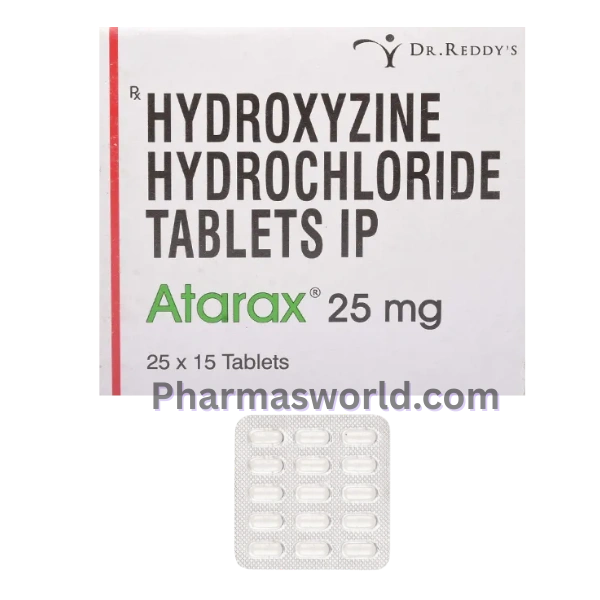
Atarax 25 Mg

Atarax 25 Mg

Price range: $9.90 through $27.10

Atarax 25 Mg (Hydroxyzine HCl) is a prescription antihistamine commonly used to treat anxiety, itching from allergies, and sometimes insomnia. It works by blocking histamine receptors in the brain, which can have a calming effect. The 25 mg dose is often where treatment starts, with adjustments based on your response. Drowsiness is very common, so avoid driving or operating machinery until you know how it affects you. It can also interact with alcohol and other sedatives, so it’s important to follow your prescriber’s guidance carefully.

USA Brand Name

 Atarax

Strength

 25mg

Generic Name

 Hydroxyzine HCl

Manufacturer

 Dr. Reddy's Laboratories Ltd

Atarax 25 Mg

Variant Price Units Quantity Add to Cart
30 Tablet/s $9.90 $0.33
60 Tablet/s $18.53 $0.31
90 Tablet/s $27.10 $0.30

Limited Offer
20% Discount
PW20
Share:f𝕏win
🚚 Free Delivery🔄 Easy Returns✅ Genuine
Medically Reviewed By

Dr. Emily Carter

Senior Clinical Pharmacist

View Profile →
📋 Product Description
Atarax 25 Mg (Hydroxyzine HCl) is the kind of medication people usually get when they’re dealing with anxiety that makes it hard to function, or itching that’s keeping them up at night, or sometimes when they just need something to help them sleep through a rough patch. If you’ve been searching for “hydroxyzine 25 mg,” “Atarax for anxiety,” “itching relief medication,” “sedating antihistamine,” or “prescription sleep aid,” you’re looking at a product that’s been around for decades and still gets prescribed regularly. Most Atarax tablets contain hydroxyzine hydrochloride 25 mg. Since brand names can differ by manufacturer, it’s worth checking your blister pack to confirm the active ingredient and strength. Hydroxyzine is an antihistamine, but it’s not like the non-drowsy ones you take for seasonal allergies. This one crosses into the brain and has a calming effect, which is why it’s used for anxiety and itching, and why it makes you sleepy.

What Atarax 25 Mg is typically used for

Doctors prescribe hydroxyzine for several reasons:
  • Anxiety disorders – to help with short-term relief of tension and nervousness
  • Itching from allergic conditions – like hives, eczema, or contact dermatitis
  • Preoperative sedation – sometimes given before surgery to calm patients
  • Insomnia – when anxiety or itching is keeping you awake
  • Nausea and vomiting – occasionally used for this, though not first-line
It’s not meant for long-term daily anxiety management. For chronic anxiety, doctors usually prefer SSRIs or other medications that are safer for extended use. Atarax is more of a “as needed” or short-term tool.

How it works in simple terms

Hydroxyzine blocks histamine H1 receptors in your brain and body. Histamine is involved in allergic reactions, but in the brain, it also plays a role in wakefulness. By blocking it, hydroxyzine reduces itching and creates a sedating, calming effect. It’s similar to how Benadryl makes you sleepy, but hydroxyzine is generally more potent and longer-lasting.

How to take it in real life

For anxiety or itching, the typical dose is 25 mg three or four times daily as needed. For sleep, it’s often 25–50 mg at bedtime. Your doctor will adjust based on your response and side effects. Some people only need 25 mg once in a while; others need it more regularly for a short period. A few practical tips:
  • Take it with or without food – food doesn’t significantly affect absorption
  • If using for sleep, take it about 30 minutes before bed
  • If using for anxiety, take it when you feel symptoms coming on
  • Don’t exceed the prescribed dose – more won’t help more, it’ll just make you more sedated

Side effects that are very common

The biggest one is drowsiness. Many people feel groggy for several hours after taking it. Other common effects include:
  • Dry mouth
  • Dizziness
  • Blurred vision
  • Constipation
  • Difficulty urinating (especially in older men with prostate issues)
These are usually mild and wear off as the drug leaves your system (about 4–6 hours for most people, though it can last longer).

Important warnings you should not ignore

  • Do not drive or operate machinery after taking it, especially until you know how strongly it affects you. Even if you feel “okay,” your reaction time is slowed.
  • Avoid alcohol completely. The combination can cause extreme drowsiness, impaired coordination, and even respiratory depression in high doses.
  • Be careful with other sedatives like opioids, benzodiazepines, or sleep aids. The additive effect can be dangerous.
  • Elderly people are more sensitive to the sedating and anticholinergic effects (like constipation and confusion).

Who should be extra careful

Tell your doctor if you have:
  • Glaucoma (hydroxyzine can increase eye pressure)
  • Enlarged prostate (can worsen urinary retention)
  • Liver disease (the drug is metabolized by the liver)
  • Asthma or COPD (can thicken mucus)
  • Heart rhythm problems (rarely can cause QT prolongation)
If you’re pregnant or breastfeeding, discuss the risks. Hydroxyzine crosses the placenta and passes into breast milk, so it’s only used if the benefits outweigh the risks.

What to avoid while taking it

  • Driving (especially within the first few hours)
  • Alcohol (completely)
  • Grapefruit juice (can increase levels in some people, though this is more of an issue with certain other drugs)
  • Caffeine late in the day if you’re using it for sleep (kind of defeats the purpose)

Monitoring and follow-up

If you’re using Atarax regularly for more than a few weeks, your doctor should check in to see if it’s still needed and if you’re having any side effects. For anxiety, the goal is usually to transition to a longer-term solution. For itching, you might use it seasonally or as needed.

What if it’s not working?

If you’re still anxious, still itching, or still not sleeping after a reasonable dose and timeframe, it might not be the right medication for your situation. Don’t just increase the dose on your own. Talk to your doctor about other options.

Available Strengths (as available in the market)

Hydroxyzine tablets are commonly available in:
  • 10 mg
  • 25 mg (Atarax 25 Mg)
  • 50 mg
Hydroxyzine is also available as:
  • Capsules (25 mg, 50 mg, 100 mg)
  • Oral solution (10 mg/5 mL)
  • Intramuscular injection (for hospital use)
Always match your prescription exactly.

FAQs

1) What is Atarax 25 Mg used for?

Atarax 25 Mg (hydroxyzine) is used for short-term anxiety relief, itching from allergies, and as a sedative before surgery. It can also help with sleep if anxiety or itching is keeping you awake.

2) How long does Atarax 25 Mg take to work?

It usually starts working within 30–60 minutes for anxiety and itching. The sedative effect can last 4–6 hours, sometimes longer in older adults.

3) Can I take Atarax 25 Mg every day?

It’s generally meant for short-term use. If you find you need it daily for more than a few weeks, talk to your doctor about a longer-term solution, as other medications are safer for chronic use.

4) What should I avoid while taking Atarax?

Avoid alcohol completely, don’t drive or operate machinery until you know how it affects you, and be cautious with other sedating medications. Tell your doctor about all medications you’re taking.

5) What are the most serious side effects?

Extreme drowsiness, confusion (especially in elderly people), difficulty urinating, and allergic reactions like rash or swelling. Seek medical help if you experience these.
size30 Tablet/s, 60 Tablet/s, 90 Tablet/s
Reviews

Reviews

There are no reviews yet.

Be the first to review “Atarax 25 Mg”

Your email address will not be published. Required fields are marked *

Related Products

Omnacortil 10 mg (Prednisolone)

Omnacortil 10 mg

Price range: $36.00 through $93.60
Fexopen 180 Mg

Fexopen 180 Mg

Price range: $20.52 through $52.65
Omnacortil 20 Mg

Omnacortil 20 Mg Tablet

Price range: $27.60 through $82.32
Kenacort Injection 1 ml

Kenacort Injection 1 ml

Price range: $5.38 through $27.96