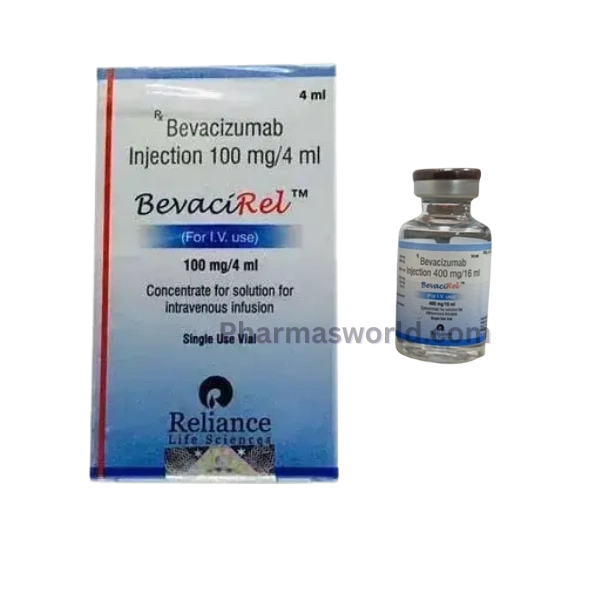
Bevacirel 400 Mg Injection

Bevacirel 400 Mg Injection

Price range: $4,331.70 through $12,450.19

Bevacirel 400 Mg Injection is a prescription medication that typically contains bevacizumab, a drug used to treat certain cancers (like colorectal, lung, ovarian) and eye conditions (like wet age-related macular degeneration and diabetic retinopathy). It works by blocking a protein that helps tumors and abnormal blood vessels grow. Because it can affect blood pressure, cause bleeding, and impact wound healing, it requires regular monitoring and must be given under medical supervision.

USA Brand Name  Avastin
Strength  400mg
Generic Name  Bevacizumab
Manufacturer  Reliance Life Sciences

Bevacirel 400 Mg Injection

Variant Price Units Quantity Add to Cart
2 Injection $4,331.70 $2,165.85
4 Injection $8,518.13 $2,129.53
6 Injection $12,450.19 $2,075.03

Limited Offer
20% Discount
PW20
Share:f𝕏win
🚚 Free Delivery🔄 Easy Returns✅ Genuine
Medically Reviewed By

Dr. Emily Carter

Senior Clinical Pharmacist

View Profile →
📋 Product Description
Bevacirel 400 Mg Injection is the kind of medication that shows up in treatment plans when the situation is serious. If you’re searching for “bevacizumab 400 mg,” “Avastin generic,” “cancer injection therapy,” “eye injection for macular degeneration,” “VEGF inhibitor,” or “anti-angiogenic treatment,” you’re looking at the right type of product. Most products labeled Bevacirel 400 Mg are bevacizumab injection vials. Please confirm the active ingredient on your vial or packaging, as brand names can vary by manufacturer. Bevacizumab is a monoclonal antibody that blocks vascular endothelial growth factor (VEGF). In plain terms, it cuts off the blood supply that tumors and abnormal eye blood vessels need to grow.

What it’s used for

Doctors use bevacizumab in two main areas:
  • Cancer treatment: For metastatic colorectal cancer, non-small cell lung cancer, glioblastoma, ovarian cancer, cervical cancer, and renal cell carcinoma, often combined with chemotherapy
  • Eye conditions: For wet age-related macular degeneration (AMD), diabetic macular edema, and retinal vein occlusion
The dose, schedule, and combination with other drugs depend entirely on your diagnosis and your oncologist or ophthalmologist’s plan.

How it’s given

Bevacirel is given as an intravenous (IV) infusion for cancer, usually in a clinic or hospital setting. For eye conditions, a much smaller dose is injected directly into the eye by a specialist. The 400 mg vial is typically used for cancer treatment, where the dose is calculated based on your body weight (for example, 5 mg/kg, 10 mg/kg, or 15 mg/kg every 2 to 3 weeks). You don’t administer this at home. It requires proper dilution and monitoring during infusion.

Side effects that matter

Common side effects can include:
  • High blood pressure
  • Fatigue, headache
  • Nosebleeds, easy bruising
  • Protein in the urine (proteinuria)
  • Diarrhea, nausea
  • Delayed wound healing
Serious risks that need immediate attention:
  • Severe bleeding (coughing blood, black stools, unusual bruising)
  • Blood clots (chest pain, shortness of breath, leg swelling)
  • GI perforation (severe abdominal pain, fever)
  • Severe high blood pressure
  • Kidney problems (swelling, decreased urine)
  • Stroke symptoms (sudden weakness, speech trouble)
Because of these risks, treatment involves regular lab work and check-ins.

Monitoring is not optional

Your care team will typically monitor:
  • Blood pressure at every visit
  • Urine protein levels
  • CBC and liver function
  • Signs of bleeding or clotting
If protein in urine gets high, or blood pressure becomes hard to control, your doctor may pause or adjust treatment.

Important warnings

  • Do not use before or after surgery until your surgeon clears you (it impairs wound healing)
  • Avoid if you have uncontrolled high blood pressure or a history of severe bleeding
  • Not for use in pregnancy—it can harm the fetus
  • Use reliable contraception during treatment and for some time after
If you develop severe headache, confusion, chest pain, or sudden swelling, seek urgent care.

Available Strengths (as available in the market)

Bevacizumab is commonly available in these strengths:
  • 100 mg/4 mL vial
  • 400 mg/16 mL vial (like Bevacirel 400 Mg Injection)
  • Some biosimilars may come in different presentations
Always match the strength and volume to your prescription.

FAQs

1) What is Bevacirel 400 Mg Injection used for?

It’s typically bevacizumab, used for certain cancers and eye conditions by blocking blood vessel growth. Your oncologist or ophthalmologist decides if it fits your plan.

2) How is Bevacirel 400 Mg given?

For cancer, it’s given as an IV infusion in a clinic. For eye conditions, a much smaller dose is injected directly into the eye by a specialist.

3) What are the most serious side effects?

Severe bleeding, blood clots, GI perforation, high blood pressure, and kidney problems are the major risks that require urgent attention.

4) Why do I need so many blood and urine tests?

Bevacizumab can raise blood pressure and cause protein in urine, plus affect blood counts. Monitoring helps catch problems early and keeps treatment as safe as possible.

5) Can I have surgery while on Bevacirel?

Usually not without planning. Bevacizumab impairs wound healing, so surgeons often want you off it for a few weeks before and after surgery. Always coordinate between your cancer doctor and surgeon.
size2 Injection, 4 Injection, 6 Injection
Reviews

Reviews

There are no reviews yet.

Be the first to review “Bevacirel 400 Mg Injection”

Your email address will not be published. Required fields are marked *