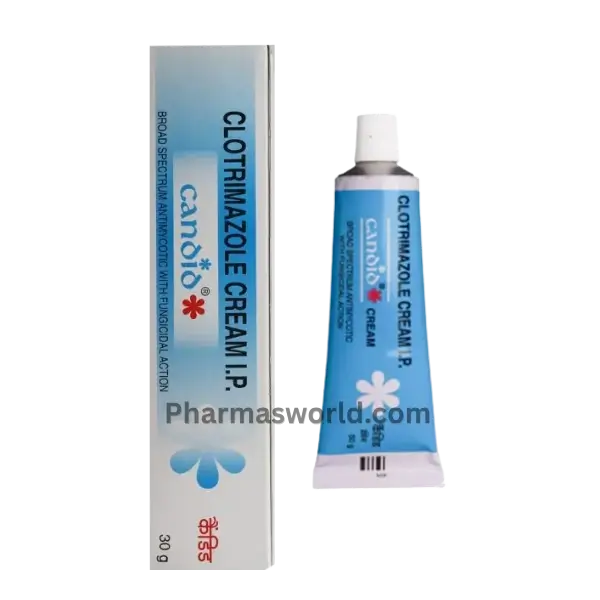
What is the 15 grams of Candid Cream?
Candid Cream 15 gm is an
antifungal medicine that you put on your skin to kill fungi. The major constituent is clotrimazole. It is an imidazole antifungal drug, which is one of the most prevalent types of antifungal drugs used around the world to treat superficial
fungal infections. Dermatologists and general practitioners in the US say that Candid Cream, developed by Glenmark Pharmaceuticals, is safe and works well.
What does Candid Cream 15 gm do?
Clotrimazole, the main ingredient in Candid Cream, works by targeting the cell membrane of fungi. Step by step, here is how it works:
- Stops the Making of Ergosterol: Clotrimazole stops the making of ergosterol, which is a key element of the membrane of fungal cells.
- Weakens the Cell Wall of Fungi: Without adequate ergosterol, the cell membrane of fungi becomes weak and unstable.
- The fungus dies because the membrane is weak, which lets the stuff inside the fungal cell leak out.
- Stops Regrowth: Using it again and again makes sure that any fungus spores that are still present are killed, which stops the problem from recurring again.
This method makes Candid Cream effective against a lot of different molds, yeasts, and dermatophytes that can infect the skin.
What people commonly do with Candid Cream 15 gm
Candid Cream 15 gm is used to treat a multitude of skin issues caused by fungi. Most of the time, it fixes these problems:
- Athlete's Foot (Tinea Pedis) is a fungal disease that causes the skin between the toes to itch, burn, and peel.
- Jock itch (Tinea Cruris) is a red, itchy rash that commonly shows up in the groin and inner thigh area when it's warm and humid.
- Ringworm (Tinea Corporis) is a red, scaly patch on the skin that spreads out in a circle.
- Fungal Nappy Rash: Fungal infections in the diaper area of newborns who are getting medical treatment
- Cutaneous Candidiasis is a kind of yeast infection that happens in the skin's folds, as under the breasts, in the armpits, and in the folds of the abdomen.
- Tinea Versicolor (Pityriasis Versicolor) is a skin condition that causes patches of different colors to appear because there is too much yeast growing on them.
- Fungal Paronychia: An infection around the nail beds caused by Candida species
- Intertrigo is a fungal infection that arises in skin folds where moisture can get stuck.
The Right Way to Use Candid Cream 15 gm
You have to apply Candid Cream the right way to get the most out of it. Do these things to achieve the best results:
Step 1: Clean the Affected Area
Gently wash the affected skin with mild soap and lukewarm water. Make sure the area is fully dry using a clean towel. Fungi loves wet places, therefore it's crucial to make sure your skin is thoroughly dry.
Step 2: Apply a thin layer
Put a small amount of Candid Cream on your finger. Put a thin, even coating over the full area that is affected and about 1 centimeter of healthy skin surrounding it.
Step 3: Gently rub
Gently rub the lotion into your skin until it is entirely absorbed. Don't put a bandage over the area unless your doctor advises you to.
Step 4: Wash Your Hands
To stop the sickness from spreading to other parts of your body, always wash your hands well after putting on the lotion.
Step 5: Do it again as directed
You should use Candid Cream two to three times a day, or as your doctor directs you to. You should still finish the treatment even if your symptoms go better before the end of the specified time.
Dosage Guidelines Based on the State
| Condition |
How often it is used |
Normal Length |
| Athlete's Foot |
2 to 3 times a day |
4 weeks |
| Jock Itch |
twice a day |
2 to 4 weeks |
| Ringworm |
2–3 times a day |
3–4 weeks |
| Cutaneous Candidiasis |
2–3 times a day |
2–4 weeks |
| Tinea Versicolor |
Two times a day |
two to three weeks |
Here's an advice from my clinical experience: Many people stop taking their prescription as soon as the itching stops, which is a mistake. There have been a lot of times in the 25 years I've been practicing when the condition came back because the patients stopped taking the cream too quickly. You should always finish the whole course, even if your skin seems completely clear, to make sure all the fungus spores are gone.
The side effects of Candid Cream 15 gm
Candid Cream is normally safe when used as directed. But, like any other drug, it could have some bad effects for some people.
Common Side Effects (Usually Mild and Go Away on Their Own):
- A little bit of burning or stinging where you put it on
- Skin that is red or inflamed and then goes away after a while
- Putting it on may make your skin itch a little.
- The skin that is treated may also get dry or peel.
Call your doctor if you have any strange side effects:
- Redness that doesn't go away or becomes worse
- Swelling where the drug was put on
- Skin that is blistering or oozing
- Severe itching that doesn't get any better
Rare but serious side effects (get medical help right away):
- A bad allergic reaction that includes hives, swelling of the face, lips, and tongue, and problems breathing.
- A rash on the skin that goes beyond the area that was treated
- More pain, warmth, and pus are signs of a second bacterial infection.
Important: If you experience any weird or serious reaction after using Candid Cream, stop using it straight away and call your doctor.
Precautions and Warnings
Keep these safety considerations in mind before you use Candid Cream 15 gm:
- You can only apply Candid Cream on the outside. Never put anything in your mouth, eyes, nose, or vagina unless it is meant to go there. If you touch it by mistake, wash it off with a lot of water.
- If you know you are allergic to Clotrimazole or any other imidazole antifungal drug, don't use this cream.
- Pregnancy and breastfeeding: Most people think that topical clotrimazole is safe to use during pregnancy, but you should always talk to your doctor or midwife first. Don't put the lotion on or near your breasts if you are breastfeeding.
- Kids: You can use Candid Cream on kids, but only if a doctor is there to aid and watch.
- Your doctor should warn you not to cover the area that was treated with tight bandages or plastic wrap. This can help the treatment work better, but it also increases the risk of side effects.
- Don't put the cream on skin that is broken, cracked, or badly cut.
- Drug Interactions: Topical Clotrimazole doesn't go into the body very much, therefore drug interactions don't happen very often. But make sure to notify your doctor about any other topical treatments you are using on the same area to avoid irritation.
- Don't Get in Your Eyes—If you accidentally get the cream in your eyes, wash them out right away with a lot of clean water. If the irritation doesn't go away, see a doctor.
- Keep the tube in a cold, dry environment that is less than 25°C. Make sure the cap is properly closed after each use. After the date on the label, don't use the cream.
When to See a Doctor
Most mild to moderate fungal skin infections can be treated with Candid Cream, however you should visit a doctor if:
- After using it every day for two weeks, your symptoms don't get better.
- The infection seems to be getting worse even as treatment is going on.
- If you acquire a fever, pus, or greater pain at the site of the illness, it could signal you have a second bacterial infection.
- You are having a pretty bad allergic response.
- The infection keeps coming back when treatment is over.
- You don't know if fungus is what is making your skin bad.
Getting the appropriate diagnosis is vital since other skin problems, such eczema, psoriasis, or bacterial infections, might seem like fungal infections but need different forms of treatment.
Five Different Kinds of Candid Cream
| Different |
Active Ingredients |
Pack Size |
Main Use |
| Candid Cream |
Clotrimazole 1% |
15 gm |
Fungal skin diseases include ringworm, athlete's foot, and jock itch |
| Candid B Cream |
Clotrimazole and Beclometasone |
20 grams |
Fungal illnesses that make you itch and swell |
| Candid 3D Cream |
Clobetasol, Clotrimazole, and Neomycin |
15 grams |
Helps with bacterial and fungal infections that cause a lot of edema |
| Candid KZ Cream |
2% ketoconazole |
15 grams |
Tinea and candidiasis are two examples of fungal skin diseases |
| Candid Gold Cream |
Clotrimazole and Beclometasone |
50 grams |
Bigger pack for fungal illnesses that make you feel bad |
What is the purpose of Candid Cream 15 gram?›
Candid Cream 15 gm is a broad-spectrum antifungal cream that can help with common fungal skin infections like ringworm, jock itch, athlete's foot, cutaneous candidiasis, and tinea versicolor.
What is the main thing that makes Candid Cream work?›
The active ingredient is 1% clotrimazole w/w. It is an antifungal medication that is in the imidazole class.
How many times a day should I apply Candid Cream?›
You should use a thin layer of Candid Cream on the sore place two to three times a day, or as your doctor prescribes. Make sure the area is clean and dry before you use it.
How long does it take for Candid Cream to start working?›
Most people who use it frequently find their itching and redness become better in the first week. But the whole therapy normally doesn't work for 2 to 4 weeks, depending on how bad the infection is and what kind it is.
Can I use Candid Cream on my face?›
If you have a fungal infection, you can use Candid Cream on your face, but only if a dermatologist recommends you to. Stay away from the mouth, nose, and eyes.
Can I use Candid Cream if I'm pregnant?›
Most individuals believe that clotrimazole applied to the skin is safe to use during pregnancy. You should always talk to your doctor or obstetrician before taking any medicine when you are pregnant or nursing.
Reviews
There are no reviews yet.