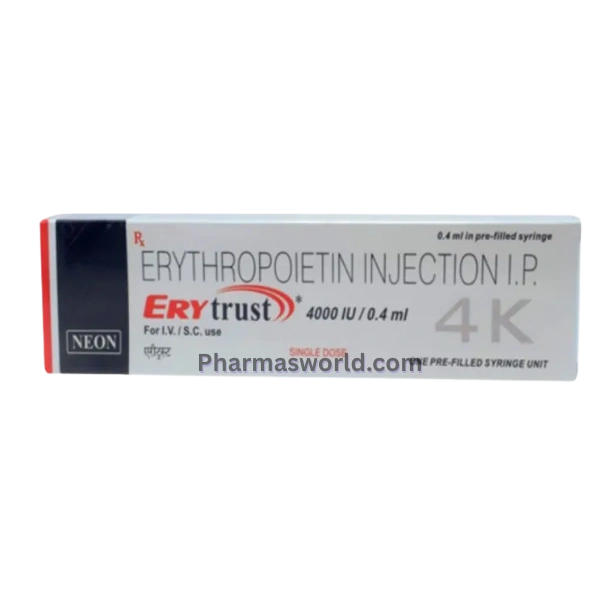
Erytrust 4000 IU Injection

Erytrust 4000 IU Injection

Price range: $62.44 through $178.84

Erytrust 4000 IU Injection is a prescription medicine that is typically an epoetin product (often epoetin alfa), used to help the body produce more red blood cells when anemia is linked to conditions like chronic kidney disease or certain chemotherapy plans. Since brand formulations can vary, it’s important to confirm the active ingredient and presentation on your pack. Safe use usually includes regular hemoglobin checks, iron monitoring, and blood pressure follow-up.

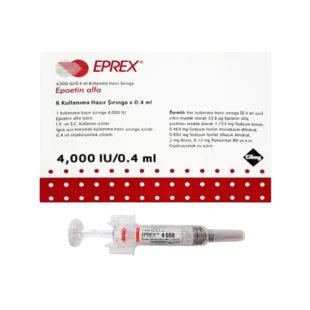
USA Brand Name  Procrit, Eprex
Strength  4000IU
Generic Name  Recombinant Human Erythropoietin Alfa / Epoetin Alfa (4000IU)
Manufacturer  Neon Laboratories Ltd

Erytrust 4000 IU Injection

Variant Price Units Quantity Add to Cart
2 Injection $62.44 $31.22
4 Injection $122.65 $30.66
6 Injection $178.84 $29.81

Limited Offer
20% Discount
PW20
Share:f𝕏win
🚚 Free Delivery🔄 Easy Returns✅ Genuine
Medically Reviewed By

Dr. Emily Carter

Senior Clinical Pharmacist

View Profile →
📋 Product Description
Erytrust 4000 IU Injection is usually prescribed when anemia is affecting real life, not just a lab report. People often describe it as feeling drained all the time, getting winded doing simple chores, or feeling like their body just cannot keep up. If you’ve been searching for things like “epoetin injection,” “anemia injection for kidney disease,” “ESA therapy,” “increase hemoglobin,” or “reduce need for blood transfusion,” that’s the general category this medication fits into. Erytrust is commonly associated with epoetin (often epoetin alfa), which is an erythropoiesis-stimulating agent or ESA. I can’t confirm what’s in your specific box, so check the label for the exact active ingredient, concentration, and whether it’s a prefilled syringe or vial. That matters for dosing and storage.

What it’s typically used for

Epoetin injections are most often used for anemia related to:
  • Chronic kidney disease (CKD), including patients on dialysis and some not on dialysis
  • Chemotherapy-associated anemia, in specific situations where the oncology team decides it’s appropriate
  • Situations where the plan is to lower transfusion needs, depending on clinical goals and risks
It’s not a fit for every kind of anemia. If anemia is mainly from iron deficiency, vitamin B12 deficiency, folate deficiency, active bleeding, or an untreated underlying cause, the priority is correcting that first. In a lot of cases, clinicians use Erytrust alongside other treatments, not instead of them.

How it works in plain English

Your body naturally makes a hormone called erythropoietin that tells the bone marrow to make red blood cells. In kidney disease, that signal can drop. In some chemo situations, the marrow can struggle too. Epoetin medicines step in and help “turn up the message” so your body can produce more red blood cells and raise hemoglobin gradually.

What improvement can feel like

This is not an instant-energy injection. When it works well, changes tend to show up over weeks. People may notice they can walk farther without stopping, feel less lightheaded, and have a little more stamina through the day. Lab numbers help confirm what’s happening, because fatigue can also come from things like inflammation, sleep issues, or low iron even when hemoglobin is improving.

Monitoring is part of safe use

With ESAs, safety is closely tied to how high hemoglobin goes and how fast it rises. If hemoglobin is pushed too high, or rises too quickly, the risk of blood clots, stroke, and other cardiovascular problems can increase in some patients. That’s why prescribers typically monitor:
  • Hemoglobin/hematocrit
  • Blood pressure (ESAs can raise it)
  • Iron levels (ferritin and transferrin saturation are common), because you need enough iron to build red blood cells
A lot of people are surprised by the iron part. Even with epoetin, low iron can limit your response. If your clinician recommends iron supplementation, it’s usually for a practical reason, not as an optional add-on.

How it’s given and handled

Erytrust may be given under the skin (subcutaneous) or into a vein (IV), depending on your situation. Use the route and schedule your clinician prescribed. Storage and handling tips that come up a lot:
  • Many epoetin products are kept refrigerated
  • Do not shake the syringe or vial
  • Do not use it if it looks unusual (cloudy, particles, discoloration), unless your product insert says otherwise
  • If you self-inject, use a proper sharps container for needles and syringes

Side effects and warning signs

Some people get mild headache, body aches, or injection-site discomfort. The red flags that deserve quick medical attention include:
  • Chest pain, sudden shortness of breath, or one-sided leg swelling (possible clot)
  • Sudden severe headache, weakness, confusion, or trouble speaking (possible stroke warning signs)
  • Blood pressure that becomes difficult to control or symptoms like severe headache and vision changes
  • Allergic reaction signs like hives, swelling, or trouble breathing

Available Strengths (as available in the market)

Epoetin injections are available in multiple strengths, and availability can vary by manufacturer and supply. Common options include:
  • 2,000 IU
  • 3,000 IU
  • 4,000 IU (this product)
  • 5,000 IU
  • 10,000 IU
  • 20,000 IU
  • 30,000 IU
  • 40,000 IU
Presentations may be prefilled syringes or vials, with different volumes (mL). Match exactly to your prescription.

FAQs

1) What is Erytrust 4000 IU Injection used for?

It’s typically used to treat anemia related to chronic kidney disease or certain chemotherapy treatment plans by stimulating red blood cell production.

2) How fast does Erytrust 4000 IU start working?

It usually works gradually over weeks. Your clinician will track hemoglobin levels to see how your body is responding.

3) Do I need iron supplements with Erytrust 4000 IU?

Many people do, especially if iron stores are low. Iron helps your body actually build the red blood cells that epoetin is stimulating.

4) What are the main risks with epoetin injections?

Higher blood pressure and increased clot risk are major concerns if hemoglobin rises too high or too quickly. That’s why monitoring is routine.

5) Can I change the dose or stop the injections if I feel better?

Don’t adjust it on your own. Dosing decisions are based on lab targets and your risk factors. Talk to your prescriber before making changes.
size2 Injection, 4 Injection, 6 Injection
Reviews

Reviews

There are no reviews yet.

Be the first to review “Erytrust 4000 IU Injection”

Your email address will not be published. Required fields are marked *

Related Products

Erytrust 2000 IU 1 ml Injection

Erytrust 2000 IU 1 ml Injection

Price range: $15.23 through $43.24
Eprex 4000IU 0.4 ml Injection

Eprex 4000IU 0.4 ml Injection

Price range: $68.25 through $195.81