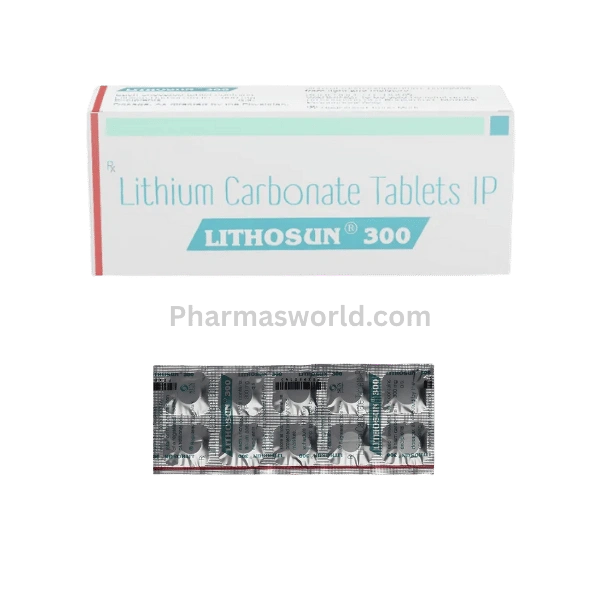
Lithosun 300 Tablet

Lithosun 300 Tablet

Price range: $21.32 through $44.10

Lithosun 300 Tablet is a lithium 300 mg tablet used to stabilize mood in bipolar disorder, helping reduce manic symptoms and prevent future mood episodes. It works best with a steady routine that includes regular blood level checks, kidney and thyroid monitoring, consistent hydration, and a stable salt intake. Many people take it with food to reduce stomach upset. Know your target lithium level, avoid dehydration, and check in quickly if you notice tremor getting worse, vomiting, diarrhea, or confusion.

Lithosun 300 Tablet

Variant Price Units Quantity Add to Cart
300 Tablet/s $21.32 $0.07
600 Tablet/s $33.60 $0.06
900 Tablet/s $44.10 $0.05

Limited Offer
20% Discount
PW20
Share:f𝕏win
🚚 Free Delivery🔄 Easy Returns✅ Genuine
Medically Reviewed By

Dr. Emily Carter

Senior Clinical Pharmacist

View Profile →
📋 Product Description
Lithosun 300 Tablet is a lithium 300 mg tablet used as a mood stabilizer in bipolar disorder. It has been a cornerstone treatment for decades because it helps control acute mania and lowers the risk of future episodes when taken consistently. If you are starting or adjusting lithium, a little planning goes a long way. A steady dose schedule, regular lab checks, consistent hydration, and a predictable salt intake make the medicine safer and more effective.

How it helps, in everyday terms

  • Lithium smooths out extreme mood swings by modulating signaling in brain cells.
  • It can reduce intensity and frequency of manic episodes and support maintenance between episodes.
  • Benefits build as blood levels reach your personal therapeutic range.

How to take Lithosun 300 Tablet

  • Dosing is individualized. Many adults start at 300 mg two or three times daily for immediate release tablets. Your clinician will adjust the total daily dose based on how you respond and your blood level.
  • Take doses at the same time each day. With food can help nausea or stomach upset.
  • Do not change your dose or stop suddenly without medical guidance. If a dose is missed and it is close to the next one, skip the missed dose.

Monitoring and target levels

  • Blood level checks are essential. Typical targets are about 0.8 to 1.2 mEq/L for acute mania and about 0.6 to 1.0 mEq/L for maintenance. Your clinician will set your exact goal.
  • Levels are usually drawn 12 hours after your last dose, often in the morning.
  • Baseline and periodic labs include kidney function, thyroid function, electrolytes, and sometimes calcium. Women of childbearing potential may be asked to take a pregnancy test before starting.

Safety basics that matter

  • Hydration and salt: keep daily fluid and salt intake steady. Dehydration or a big drop in salt can raise lithium levels and side effects. Hot weather, vomiting, or diarrhea can push levels up. Call your clinician if that happens.
  • Alcohol and caffeine: keep alcohol modest. Large swings in caffeine can change lithium levels and tremor.
  • Driving and focus: until you know your steady dose, be cautious with tasks that need full attention.

Common side effects

  • Nausea, mild diarrhea, metallic taste
  • Fine hand tremor, thirst, frequent urination
  • Weight gain, acne or skin changes
  • Sleepiness or feeling a bit slowed at first
These often improve as your dose is fine tuned. Let your clinician know what you feel so they can adjust.

Signs of high lithium levels. Get medical help promptly

  • Worsening tremor that is coarse rather than fine
  • Severe nausea, vomiting, or persistent diarrhea
  • Muscle weakness, unsteady gait, slurred speech
  • Confusion, drowsiness, or seizures

Important interactions

Some medicines can raise lithium levels and risk of toxicity. Always check before starting anything new.
  • NSAIDs such as ibuprofen and naproxen
  • ACE inhibitors such as lisinopril and ARBs such as losartan
  • Thiazide diuretics such as hydrochlorothiazide. Loop diuretics can also affect levels
  • Metronidazole and some antibiotics

Other cautions

  • Combining with antipsychotics or carbamazepine can increase risk of neurologic side effects. Your team will decide on safe combinations.
  • Serotonergic antidepressants are often used with lithium, but monitoring for symptoms is important.

Everyday tips that actually help

  • Keep a small note of dose times, side effects, and any changes in fluid or salt intake. It makes follow ups more productive.
  • Use one pharmacy if possible so drug interaction checks are automatic.
  • Plan ahead for travel. Keep your dosing time within a few hours of your usual schedule and bring a list of your medicines and your last lithium level.

Special situations

  • Pregnancy and breastfeeding: lithium requires careful risk benefit discussion. If you plan a pregnancy, talk with your clinician early. Never stop abruptly without a plan.
  • Thyroid and kidneys: lithium can affect thyroid function and, over time, kidney function. This is why routine lab checks are part of safe long term use.
  • Skin conditions: acne or psoriasis can flare in some people. Tell your clinician if this shows up.

Available strengths in the market

Lithium products are available in several forms. Your prescriber will choose the one that fits your plan.
  • Lithium carbonate immediate release tablets or capsules: 150 mg, 300 mg
  • Lithium carbonate extended release tablets: 300 mg, 450 mg, 600 mg
  • Lithium citrate oral solution: various strengths measured in mEq per mL
Note: Labels sometimes list mEq. One 300 mg lithium carbonate tablet is roughly 8 mEq of lithium ion.

Storage and handling

  • Store at room temperature in a dry place.
  • Keep tablets in the original bottle with the cap closed.
  • Keep out of reach of children and pets.

Helpful search phrases people use

Lithosun 300 lithium tablet, lithium 300 mg dosing, lithium therapeutic range, lithium side effects tremor thirst, lithium and NSAIDs interaction, lithium blood test 12 hour trough, lithium dehydration risk, lithium thyroid monitoring, bipolar maintenance medicine, lithium ER vs IR.

FAQs

How often should my lithium level be checked?

Levels are checked about 5 to 7 days after a dose change, then periodically when stable, often every 2 to 3 months at first and then every 3 to 6 months. Your schedule may vary.

Can I take ibuprofen with the Lithosun 300 Tablet?

NSAIDs like ibuprofen can increase lithium levels. Ask for safer pain options such as acetaminophen, and if an NSAID is necessary, your clinician may arrange a level check.

What if I get a stomach bug or sweat a lot in summer?

Vomiting, diarrhea, or heavy sweating can raise lithium levels. Stay hydrated, keep salt intake steady, and call your clinician if symptoms are significant or you feel more tremor or dizziness.

Is it normal to urinate more on lithium?

Yes, increased thirst and urination are common. Report large changes. Your clinician can check for nephrogenic diabetes insipidus if symptoms are pronounced.

Can I switch to extended release lithium if I get a stomach upset?

Many people tolerate extended release tablets better. Do not switch on your own. Your clinician can convert your dose and recheck levels.
size300 Tablet/s, 600 Tablet/s, 900 Tablet/s
Reviews

Reviews

There are no reviews yet.

Be the first to review “Lithosun 300 Tablet”

Your email address will not be published. Required fields are marked *

Related Products

Encorate 300 Tablet

Encorate 300 Tablet

Price range: $19.69 through $46.41
Lametec 100 Mg

Lametec 100 Mg

Price range: $32.46 through $93.62