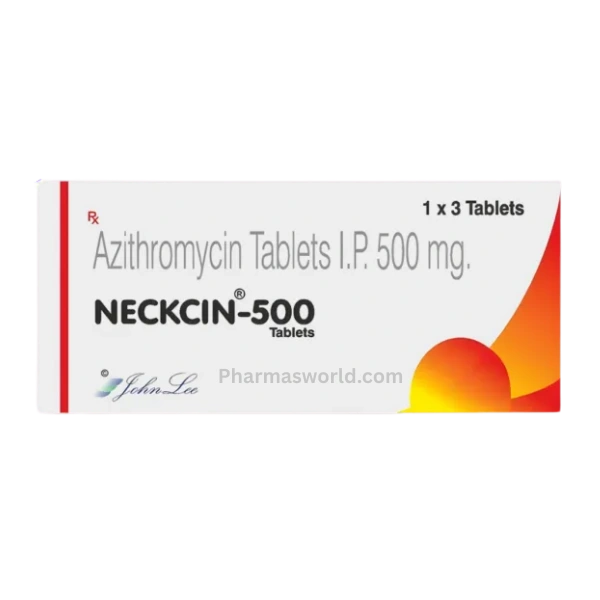
Neckcin 500 Mg Tablet

Neckcin 500 Mg Tablet

Price range: $49.20 through $93.60

Neckcin 500 Mg Tablet is presented as a 500 mg antibiotic tablet used to treat certain bacterial infections such as sinus or chest infections, skin infections, dental infections, or urinary tract infections when prescribed. Brand formulas can vary by region, so check your package for the exact active ingredient and follow your clinician’s directions closely. Take the full course, even if you feel better, and ask about food, antacids, and other medicines that may affect how it works.

USA Brand Name Neckcin
Strength 500 Mg
Generic Name Azithromycin

Neckcin 500 Mg Tablet

Variant Price Units Quantity Add to Cart
60 Tablet/s $49.20 $0.82
90 Tablet/s $72.00 $0.80
120 Tablet/s $93.60 $0.78

Limited Offer
20% Discount
PW20
Share:f𝕏win
🚚 Free Delivery🔄 Easy Returns✅ Genuine
Medically Reviewed By

Dr. Emily Carter

Senior Clinical Pharmacist

View Profile →
📋 Product Description
Neckcin 500 Mg Tablet is a prescription antibiotic tablet often used to treat confirmed or strongly suspected bacterial infections. If you have been given this medicine, your clinician likely suspects a bacterial cause for your symptoms, not a virus like a cold or the flu. Because brand names can differ, the active ingredient in Neckcin may vary. Always read your label to confirm what you are taking and follow the exact dosing plan on your prescription.
  • What Neckcin 500 Mg Tablet is commonly used for

  • Respiratory infections such as acute sinusitis, bronchitis, or community acquired pneumonia when bacterial
  • Ear, nose, and throat infections as directed
  • Uncomplicated skin and soft tissue infections
  • Dental infections
  • Uncomplicated urinary tract infections in select cases Your exact diagnosis and the bacteria suspected will determine whether this antibiotic is appropriate. Cultures or swabs, when available, help guide the choice.

How it works in simple terms

Antibiotics target bacteria so they stop multiplying or die off. As the bacteria clear, inflammation settles and symptoms improve. Because classes of antibiotics work differently, the directions on your label matter. Some need an empty stomach. Others need food. Check before you start.

How to take it for the best results

  • Follow the dose, timing, and duration on your prescription label. Do not stop early, even if you feel better.
  • Swallow with a full glass of water. Ask if you should take it with food. A light snack can help if you feel nauseated.
  • If your label says to avoid antacids or minerals, keep a 2 to 4 hour gap from products that contain aluminum, magnesium, calcium, iron, or zinc. These can bind many antibiotics and reduce absorption.
  • Set reminders so you take each dose on time. Even spacing helps keep blood levels steady.

Missed dose

If you forget a dose, take it when you remember unless it is close to the next one. Do not double up. If you miss more than one dose, call your clinician for advice.

What to expect

  • Many people start to feel better within 48 to 72 hours. Keep going until the end of the course.
  • If you are not improving after 3 days, or if symptoms are getting worse, reach out. You may need a recheck, a culture, or a different plan.

Common side effects

  • Nausea, stomach upset, metallic taste, or mild diarrhea
  • Headache or dizziness
  • Rash or itching
  • Yeast overgrowth in some people after a course of antibiotics
Call for medical advice right away if you develop severe diarrhea that is watery or bloody, hives or swelling, trouble breathing, yellowing of the eyes or skin, dark urine, or severe skin reactions.

Important cautions and interactions

  • Antacids and mineral supplements can interfere with many antibiotics. Space them out if your label instructs it.
  • Some antibiotics can raise the effect of blood thinners such as warfarin. If you take warfarin, ask whether you need extra INR checks.
  • A few antibiotic classes can affect heart rhythm in sensitive people. If you have a history of arrhythmias, tell your clinician what other medicines you take.
  • Sun sensitivity can occur with certain antibiotics. If your label mentions this, use sunscreen, wear protective clothing, and limit midday sun.
  • Tendon pain or swelling can happen with fluoroquinolone antibiotics. Stop the medicine and get medical help if you notice pain in the Achilles, shoulder, or other tendons.
  • Alcohol may increase stomach upset or dizziness. If you drink, keep it light until you know how you feel.

Who should get medical advice before use

  • People with severe kidney or liver disease who might need dose adjustments
  • Those with a history of severe antibiotic allergies or C. difficile colitis
  • Pregnant or breastfeeding people should ask about the safest options for their situation
  • Anyone taking multiple prescription medicines or supplements that could interact

Simple tips that make a real difference

  • Take doses at evenly spaced times and finish the entire course.
  • Drink water, rest, and add a simple probiotic or yogurt if your clinician agrees to support your gut during treatment.
  • If you are treating a UTI, hydration and regular bathroom trips help flush bacteria.
  • For sinus or chest infections, saline rinses, humidified air, and gentle activity often help symptoms while the antibiotic works.

When to call a clinician

  • Fever persists beyond 72 hours of treatment or returns after improving
  • New or worsening shortness of breath, chest pain, neck stiffness, severe headache, or confusion
  • Severe diarrhea, abdominal cramps, or signs of dehydration
  • A spreading rash or any signs of anaphylaxis like lip or tongue swelling

Available strengths in the market

Antibiotic tablets in this category are commonly available as:
  • 250 mg tablets
  • 500 mg tablets
  • 750 mg tablets
Other forms may include oral suspensions for children and extended release or injectable options in certain settings. Use only the exact strength and form on your prescription label.

Storage and handling

  • Store at room temperature in a dry place away from heat and direct light.
  • Keep tablets in the original bottle or blister until use.
  • Keep out of reach of children and pets. Do not use it after the expiration date.

Helpful search phrases people use

Neckcin 500 mg usage, antibiotic for sinus infection, UTI antibiotic tablet, how to take antibiotics with antacids, antibiotic side effects, can I drink alcohol on antibiotics, how long antibiotics take to work, antibiotic food interactions, complete antibiotic course, antibiotic dosing times.

FAQs

What is a Neckcin 500 Mg Tablet used for?

Neckcin 500 Mg Tablet is an antibiotic tablet used to treat certain bacterial infections such as sinus, chest, skin, dental, or urinary tract infections when prescribed. The exact infections it treats depend on the active ingredient listed on your label.

How should I take a Neckcin 500 Mg Tablet?

Take it exactly as your prescription says, at evenly spaced times, and finish the full course. Ask whether to take it with food and how to space antacids or mineral supplements so the medicine absorbs properly.

How soon will I feel better?

Many people improve within 48 to 72 hours. If you are not getting better after 3 days, or if you feel worse, contact your clinician to review the plan.

Can I take this with antacids, vitamins, or dairy?

Some antibiotics interact with aluminum or magnesium antacids and minerals like calcium, iron, or zinc. A 2 to 4 hour gap is often recommended. Check your label or ask a pharmacist for your specific product.

What side effects should I watch for?

Mild stomach upset, nausea, or loose stools are common. Seek help right away for severe diarrhea, hives, swelling, trouble breathing, yellowing eyes or skin, dark urine, or tendon pain, and report any serious rash.
size120 Tablet/s, 60 Tablet/s, 90 Tablet/s
Reviews

Reviews

There are no reviews yet.

Be the first to review “Neckcin 500 Mg Tablet”

Your email address will not be published. Required fields are marked *

Related Products

Azax 500 Mg

Azax 500 Mg

Price range: $18.47 through $68.25
Azifast 500 Tablet

Azifast 500 Tablet

Price range: $19.89 through $49.14
Azeetop 1000 Mg

Azeetop 1000 Mg

Price range: $28.50 through $81.00
Budamate 200

Budamate 200

Price range: $30.08 through $86.18