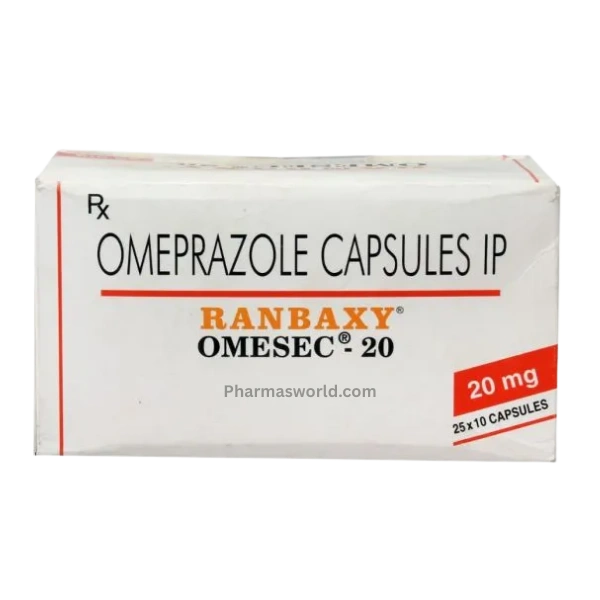
Omesec 20 Mg

Omesec 20 Mg

Price range: $8.35 through $21.38

Omesec 20 Mg is an omeprazole 20 mg delayed release acid reducer used for GERD, frequent heartburn, acid reflux, and healing of erosive esophagitis. It can also be part of a treatment plan for ulcers or H. pylori when prescribed. It is usually taken once daily before a meal and is not a quick antacid. For best results, follow the timing on your label, watch for interactions, and check in with a healthcare professional if symptoms persist.

USA Brand Name Prilosec
Strength 20mg
Generic Name Omeprazole

Omesec 20 Mg

Variant Price Units Quantity Add to Cart
30 Capsule/s $8.35 $0.28
60 Capsule/s $15.71 $0.26
90 Capsule/s $21.38 $0.24

Limited Offer
20% Discount
PW20
Share:f𝕏win
🚚 Free Delivery🔄 Easy Returns✅ Genuine
Medically Reviewed By

Dr. Emily Carter

Senior Clinical Pharmacist

View Profile →
📋 Product Description
Omesec 20 Mg is an omeprazole 20 mg tablet or capsule that lowers stomach acid to calm acid reflux and heartburn so your esophagus has a chance to heal. If you are dealing with burning in the chest after meals, sour taste, chronic throat clearing, or nighttime reflux, a proton pump inhibitor like omeprazole can help. Many people notice improvement within a day or two, with full benefit after several days of steady use. Omesec 20 Mg is not a chewable antacid. Think of it as a daily reset for the acid pumps in your stomach.

What Omesec 20 Mg is used for

  • Frequent heartburn and acid reflux
  • GERD symptom control and healing of erosive esophagitis
  • Short term treatment of gastric or duodenal ulcers when prescribed
  • Part of combination therapy for H. pylori eradication
  • Stomach protection for people at ulcer risk who must take NSAIDs

How it works in simple English

Omeprazole gently turns down the acid pumps in your stomach lining. With less acid, there is less splash up into the esophagus, which means less irritation and a better chance for healing. It does not work instantly like an antacid. Most people feel relief within 24 hours and the full effect after 3 to 4 days of consistent dosing.

How to take it for best results

  • Take Omesec 20 Mg once daily 30 to 60 minutes before breakfast unless your clinician gives different instructions.
  • Swallow the delayed release dosage form whole with water. Do not crush or chew.
  • If you have trouble swallowing, ask a pharmacist about approved methods or alternate forms before altering the tablet or capsule.
  • If you miss a dose, take it when you remember unless it is close to the next dose. Do not double up.

Typical dosing guidance you might hear

  • Frequent heartburn: many adults use 20 mg once daily for a 14 day course. You can repeat a course after several months if symptoms return. If you need frequent courses, get medical advice.
  • GERD or erosive esophagitis: often 20 mg to 40 mg once daily for 4 to 8 weeks, with maintenance at the lowest effective dose if symptoms return.
  • H. pylori: used with specific antibiotics, commonly 20 mg twice daily for 10 to 14 days. Follow your exact prescription.

What to expect day to day

  • Some relief can start in 24 hours. Full benefit usually shows in a few days.
  • Trigger foods can still cause flares. Large or late meals, spicy or fatty foods, caffeine, chocolate, peppermint, alcohol, and smoking are common culprits.
  • Seek urgent care for alarm symptoms like trouble swallowing, chest pain with pressure, vomiting blood, black stools, persistent vomiting, or unplanned weight loss.

Common side effects

  • Headache
  • Nausea, gas, stomach pain, constipation, or diarrhea
  • Dry mouth or a mild metallic taste
  • Dizziness or fatigue

Less common but important

  • Low magnesium with long term use, which can cause cramps, irregular heartbeat, or seizures
  • Vitamin B12 or iron deficiency after extended courses
  • Kidney issues such as interstitial nephritis with fatigue, swelling, or urination changes
  • Higher chance of C. difficile associated diarrhea, especially after antibiotics
  • Bone thinning and fracture risk with prolonged high dose use in at risk individuals

Drug interactions to know about

  • Clopidogrel: omeprazole can reduce clopidogrel activation. Ask your cardiology or primary team about acid reducers that fit your heart plan.
  • Diazepam, warfarin, phenytoin, and digoxin may need monitoring.
  • High dose methotrexate levels can increase when combined with PPIs.
  • Drugs that need stomach acid for absorption, like ketoconazole or itraconazole, may be less effective.
  • St John’s wort or rifampin can reduce omeprazole levels.
  • Always share your full list of medicines and supplements so a professional can check for interactions.

Practical tips that really help

  • Keep meals smaller and avoid lying down for 2 to 3 hours after eating.
  • Elevate the head of the bed 6 to 8 inches if nighttime reflux is a problem.
  • A short walk after meals, steady hydration, and a simple food diary can make a noticeable difference.
  • Use the lowest effective dose for the shortest time that controls symptoms. Reassess long term daily use with your clinician.

Who should check with a clinician first

  • Anyone with chest pain that feels like pressure or spreads to the arm or jaw
  • People with trouble swallowing, new hoarseness, or unplanned weight loss
  • Those with liver or kidney disease who may need monitoring
  • Adults over 60 who use NSAIDs often or have a history of ulcers or GI bleeding

Available strengths in the market

Omeprazole products are commonly available as:
  • 10 mg granules or packets for oral suspension
  • 20 mg delayed release capsules or tablets
  • 40 mg delayed release capsules or tablets Pediatric packets may be available in certain strengths. Your prescriber will select the form and dose that match your diagnosis and goals.

Storage and handling

  • Store at room temperature in a dry place away from moisture and heat.
  • Keep tablets or capsules in the original blister or bottle until use.
  • Keep out of reach of children and pets.

Helpful search phrases people use

Omesec 20 mg, omeprazole 20 mg, GERD treatment, acid reflux medicine, 14 day heartburn course, how long omeprazole takes to work, omeprazole vs esomeprazole, omeprazole side effects, omeprazole and clopidogrel, best time to take omeprazole.

FAQs

What is Omesec 20 Mg used for?

Omesec 20 Mg contains omeprazole 20 mg. It reduces stomach acid to help with frequent heartburn, GERD, and healing of erosive esophagitis. It is also used in ulcer treatment plans and H. pylori regimens when prescribed.

When should I take my daily dose?

Most people take it 30 to 60 minutes before breakfast so it is working when you eat. If you need a second daily dose or are on an H. pylori plan, follow the timing given by your clinician.

How long until I feel better?

Some improvement can start in 24 hours, with full effect after 3 to 4 days of steady use. If symptoms continue after a standard course or return quickly, check in with a healthcare professional.

Can I use Omesec with antacids or H2 blockers?

Short term use with an antacid for breakthrough symptoms is sometimes fine, but spacing matters. If you also use an H2 blocker like famotidine, ask about timing so each product can do its job.

Are there risks with long term use?

Longer courses can affect magnesium and vitamin B12 levels, and may raise the risk of certain infections or bone thinning. If you need ongoing therapy, plan periodic check ins to review dose and duration.
size30 Capsule/s, 60 Capsule/s, 90 Capsule/s
Reviews

Reviews

There are no reviews yet.

Be the first to review “Omesec 20 Mg”

Your email address will not be published. Required fields are marked *

Related Products

PAN 40 Tablet

PAN 40 Tablet

Price range: $33.17 through $83.16
Facid 20 Mg

Facid 20 Mg

Price range: $2.00 through $5.67
Omez 40 Mg Tablet

Omez 40 Mg Tablet

Price range: $11.41 through $31.45
Ranitidine 150 mg

Ranitidine 150 mg (Zinetac)

Price range: $9.00 through $15.00