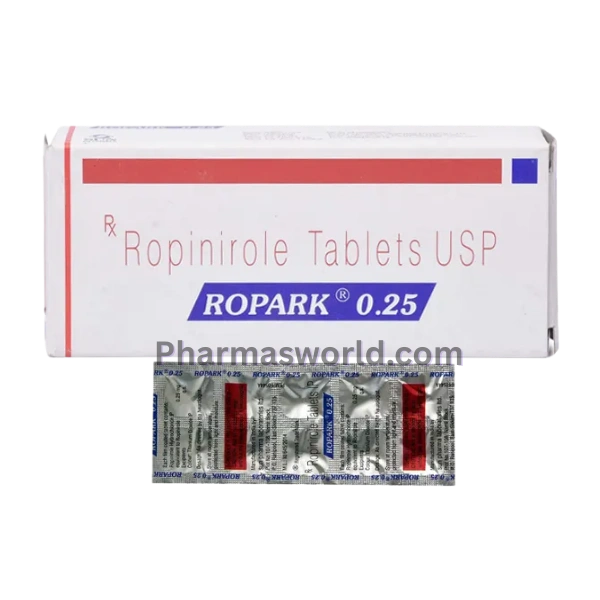
Ropark 0.25 Mg

Ropark 0.25 Mg

Price range: $7.92 through $21.68

Ropark 0.25 Mg (Ropinirole) is a prescription dopamine agonist used to treat Parkinson's disease and restless legs syndrome (RLS). It works by mimicking dopamine in the brain, which helps control movement and reduces the uncomfortable urge to move your legs. This low 0.25 mg dose is usually where treatment starts, especially for RLS or early Parkinson's, before gradually increasing as needed. Common side effects include nausea, dizziness, and drowsiness, and it should never be stopped suddenly without medical guidance.

USA Brand Name Requip
Strength 0.25mg
Generic Name Ropinirole
USA Brand Name Sun Pharma Laboratories, India

Ropark 0.25 Mg

Variant Price Units Quantity Add to Cart
30 Tablet/s $7.92 $0.26
60 Tablet/s $14.82 $0.25
90 Tablet/s $21.68 $0.24

Limited Offer
20% Discount
PW20
Share:f𝕏win
🚚 Free Delivery🔄 Easy Returns✅ Genuine
Medically Reviewed By

Dr. Emily Carter

Senior Clinical Pharmacist

View Profile →
📋 Product Description
Ropark 0.25 Mg (Ropinirole) is usually the first pill people take when they’re diagnosed with restless legs syndrome, or when Parkinson’s symptoms are mild enough that a doctor wants to start low and go slow. If you’ve been searching for “ropinirole 0.25 mg,” “Parkinson’s medication,” “restless legs treatment,” “dopamine agonist,” “RLS pills,” or “how to stop leg twitching at night,” you’re in the right place. Most Ropark tablets are ropinirole hydrochloride 0.25 mg. Since brand names can differ, it’s worth checking your blister pack to confirm the active ingredient and strength. Ropinirole belongs to a group called dopamine agonists. In plain English, it acts like dopamine, the brain chemical that helps control smooth, purposeful movement. When dopamine levels are low (as in Parkinson’s) or when the dopamine system is acting up (as in RLS), ropinirole steps in to calm things down.

What Ropark 0.25 Mg is used for

Doctors prescribe ropinirole for two main conditions:
  • Restless Legs Syndrome (RLS): That maddening urge to move your legs, especially at night, accompanied by creepy-crawly sensations. It can wreck your sleep and make you dread bedtime.
  • Parkinson’s Disease: Early-stage symptoms like tremor, stiffness, and slowness. Ropinirole is often used alone at first, or later combined with other Parkinson’s meds like levodopa.
The 0.25 mg dose is almost always a starting dose. It’s low enough to let your body adjust without too many side effects, but you’ll likely need to increase it over time as your doctor finds the right level for your symptoms.

How it works in simple terms

In RLS, the dopamine system in your brain is overactive at night, sending mixed signals that make your legs feel weird. In Parkinson’s, dopamine-producing cells are dying off, so there isn’t enough dopamine to control movement smoothly. Ropinirole binds to dopamine receptors and helps normalize those signals. For RLS, that means calmer legs and better sleep. For Parkinson’s, it means smoother movement and less stiffness.

How to take it in real life

For RLS, you usually take it 1 to 3 hours before bedtime. Starting at 0.25 mg once daily is typical. If symptoms persist, your doctor might increase the dose every few days until you find relief. For Parkinson’s, you usually start with 0.25 mg three times daily. The dose is increased gradually, often weekly, until symptoms improve. Some people end up taking much higher doses, but that’s a slow process guided by your neurologist. A critical warning: do not stop suddenly. Stopping ropinirole abruptly can cause a withdrawal syndrome with severe muscle stiffness, fever, and confusion. It can also make RLS or Parkinson’s symptoms come back much worse. If you need to stop, your doctor will taper you down slowly.

Side effects people actually notice

The early days on ropinirole can be rough. Many people feel:
    • Nausea or vomiting (taking it with food helps)
    • Dizziness or lightheadedness, especially when standing up fast
    • Drowsiness (some people even fall asleep suddenly during daily activities)
  • Headache
These often improve after a week or two as your body adjusts. If they’re severe, your doctor might slow down the dose increases. More serious side effects that need attention:
    • Hallucinations or confusion (more common in elderly patients)
    • Impulse control problems like compulsive gambling, shopping, or hypersexuality (this is a real thing with dopamine agonists—tell your doctor if you notice unusual urges)
    • Severe drowsiness or falling asleep while driving
  • Swelling of legs or ankles
  • Low blood pressure when standing (orthostatic hypotension)

Important warnings and what to avoid

  • Don’t drive or operate machinery until you know how it affects you, especially if you feel drowsy
  • Avoid alcohol (can worsen drowsiness and dizziness)
  • Be careful with other sedating medications like opioids, sleep aids, or anxiety meds
  • Don’t take it with antipsychotic medications that block dopamine (they can cancel each other out)
If you develop sudden severe sleepiness, stop driving and call your doctor. This side effect can appear months into treatment.

Monitoring and follow-up

Your doctor will want to see you regularly to:
  • Adjust the dose based on symptom control
  • Check for side effects like drowsiness or hallucinations
  • Monitor blood pressure (especially when standing)
  • Watch for impulse control issues (you’ll be asked about gambling, spending, or other urges)
Be honest about how you’re feeling. If the medication helps your legs but makes you feel like a zombie, that’s worth discussing.

What success looks like

For RLS, success is falling asleep without that crawling feeling and staying asleep through the night. For Parkinson’s, it’s moving more smoothly through your day with less tremor and stiffness. These improvements can take weeks to months to fully show up, and the dose will likely need adjustment over time.

Available Strengths (as available in the market)

Ropinirole immediate-release tablets are commonly available in:
  • 0.25 mg (Ropark 0.25 Mg)
  • 0.5 mg
  • 1 mg
  • 2 mg
  • 3 mg
  • 4 mg
  • 5 mg
Extended-release tablets (brand name may differ) are also available in:
  • 2 mg
  • 4 mg
  • 6 mg
  • 8 mg
  • 12 mg
Your doctor will choose the strength and formulation based on your condition and how you respond.

FAQs

1) What is Ropark 0.25 Mg used for?

It’s used to treat restless legs syndrome or Parkinson’s disease by acting like dopamine in the brain to control movement and reduce leg discomfort.

2) How long does it take to work?

For RLS, some people feel relief within a few days. For Parkinson’s, it can take weeks of gradual dose increases to see improvement.

3) Can I stop taking Ropark 0.25 Mg if I feel better?

No. Stopping suddenly can cause withdrawal symptoms and make your condition worse. Always taper under medical supervision.

4) What are the most serious side effects?

Sudden severe drowsiness, hallucinations, impulse control problems (gambling, hypersexuality), and low blood pressure are the major concerns to watch for.

5) What should I do if I miss a dose?

Take it when you remember unless it’s almost time for your next dose. Don’t double up. If you miss doses frequently, talk to your doctor about a better schedule.
size30 Tablet/s, 60 Tablet/s, 90 Tablet/s
Reviews

Reviews

There are no reviews yet.

Be the first to review “Ropark 0.25 Mg”

Your email address will not be published. Required fields are marked *

Related Products

Rasalect Tablet 1 Mg

Rasalect Tablet 1 Mg

Price range: $22.95 through $66.15
Pramirise 0.5 Mg Tablet

Pramirise 0.5 Mg Tablet

Price range: $16.68 through $42.34
Pramipex 0.25 Mg

Pramipex 0.25 Mg

Price range: $8.04 through $21.59