Look, nobody really enjoys talking about vaginal discharge. But it's one of those things your body does every single day, and ignoring changes in color or texture isn't doing you any favors.
If you've recently noticed your discharge looking more yellow than usual, your first instinct was probably to grab your phone and start searching. Totally fair. Most of the time, a yellowish tint is nothing serious. But sometimes your body is trying to tell you something, and it pays to listen.
Let's walk through what's actually going on.
Here's the thing about vaginal discharge. It changes constantly. Throughout the month, it shifts in color, thickness, and amount based on where you are in your cycle. That's just biology doing its thing.
A slight yellow tinge? That happens to pretty much everyone at some point. Discharge can pick up that color simply from sitting in your underwear and being exposed to air. Oxidation does that. It's the same reason a sliced apple turns brown.
Now, where it gets tricky is figuring out when yellow actually means something. Pale, light yellow with no weird smell and no discomfort? You're probably fine. But if we're talking deep yellow, almost greenish, chunky, or paired with a smell that makes you wrinkle your nose, that's a different conversation entirely.
Your body has a baseline. What matters most is whether this feels different from your usual pattern.
Short answer: it can be. Plenty of women see a faint yellow shade on their underwear and immediately panic. But in a lot of cases, there's genuinely nothing wrong.
Think about it this way. Clear or white discharge is what most people consider "normal." But normal has a wide range. Some women naturally produce discharge that leans slightly yellow, and they've been that way their whole lives. That's just their body.
Where it stops being normal is when other stuff shows up alongside the color change. Itching that won't quit. A smell that's noticeably off. Burning when you pee. Soreness or swelling. Those are the red flags, not the color alone.
I've seen people spiral over a tiny bit of pale yellow discharge that turned out to be absolutely nothing. And I've also seen people brush off genuinely concerning symptoms because they assumed everything was fine. Neither extreme helps. Just pay attention to the full picture.

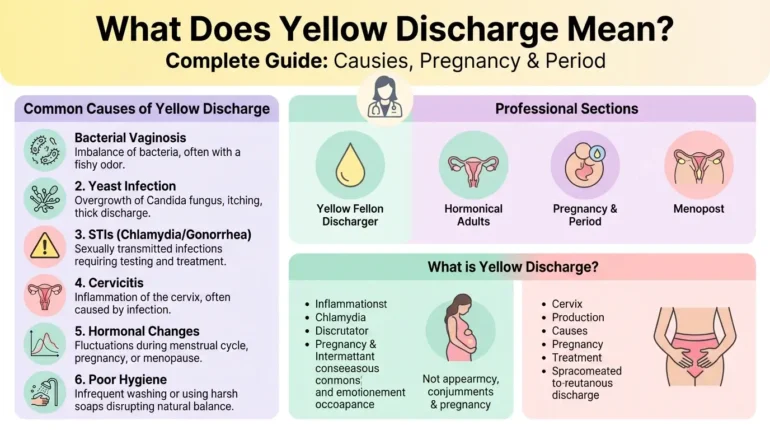
So what actually causes discharge to turn yellow? There's a handful of possibilities, ranging from "no big deal" to "you should probably call your doctor."
BV is super common and basically happens when the bacteria in your vagina get out of whack. The discharge tends to be thin, grayish or yellowish, and there's usually a fishy smell that gets stronger after sex. It's not an STI, but you do need antibiotics to clear it up. It won't just go away on its own in most cases.
Most people picture cottage cheese-like white discharge when they think of yeast infections. And yeah, that's the classic version. But some women get a pale yellow discharge instead, along with intense itching and redness. Bodies don't always follow the textbook.
This is the one nobody wants to hear, but it needs to be said. Certain sexually transmitted infections produce yellow or greenish discharge, often with a bad smell and pain during urination. Trichomoniasis is another one that causes frothy, yellowish-green discharge.
Getting tested is straightforward and fast. And the treatment options for most STIs are simple when you catch them early. Waiting only makes things harder.
Basically inflammation of the cervix, often triggered by infections. It can cause yellowish discharge and sometimes spotting between periods. Not something to ignore, but also very treatable.
Birth control, stress, ovulation, perimenopause. All of these mess with your hormone levels, and hormones directly affect discharge. A temporary yellowish shift during a stressful week or after switching birth control pills isn't unusual at all.
Pregnancy does wild things to your body. Discharge increasing significantly is one of those things that catches a lot of first-time moms off guard.
During pregnancy, your body ramps up estrogen production. That means more discharge. And sometimes that extra discharge carries a light yellow color. If it's mild, odorless, and not causing any irritation, it's most likely just your body protecting the birth canal. Totally normal pregnancy stuff.
But pregnant women also get vaginal infections more easily. The pH balance shifts, immunity changes, and suddenly you're more vulnerable to things like BV or yeast infections. Yellow discharge during pregnancy that smells bad, feels itchy, or looks unusually thick deserves a call to your OB-GYN. Don't sit on it.
One more thing worth mentioning. If you're in your third trimester and suddenly notice watery, yellowish fluid, get it checked immediately. It could be amniotic fluid leaking, and that's something your doctor needs to know about right away.
This one comes up all the time, and honestly, it's almost always harmless.
Right before your period starts, progesterone levels climb. That hormone shift thickens your discharge and can give it a slightly yellow or cream-colored appearance. It's basically your body's way of winding down the cycle and getting ready for menstruation.
Some women also notice a brownish-yellow tint in the day or two before bleeding starts. That's usually just a tiny bit of old blood mixing in with regular discharge as the lining begins breaking down. Not glamorous, but normal.
If this pattern repeats every month like clockwork and nothing else feels off, you can safely file it under "things my body just does." But if yellow discharge before your period is brand new for you, or if it comes with cramping that feels different from your usual PMS, mention it next time you see your doctor. Probably nothing, but worth a quick conversation.
If you're staring at your underwear right now wondering "why is my discharge yellow," take a breath and ask yourself a few questions.
Did this just start out of nowhere, or has it been building gradually? Is there a smell? Any itching or burning? Where are you in your cycle right now? Could you be pregnant?
Context changes everything here. Yellow discharge two days before your period with zero other symptoms is a completely different situation than sudden bright yellow discharge with a foul odor in the middle of your cycle.
And don't overlook the simple stuff. New laundry detergent, scented body wash, tight synthetic underwear, even a new brand of toilet paper. All of these can irritate your vaginal area and throw things off temporarily. Sticking with gentle, unscented products usually helps settle things down. If recurring irritation is something you deal with, checking out gentle care products for sensitive skin might be worth your time.
Bottom line: if something feels genuinely wrong, it probably warrants a professional opinion. Your gut instinct about your own body is more reliable than you think.
You don't need to rush to the doctor every time your discharge looks slightly different. But certain things shouldn't wait.
Bright yellow or green discharge with a strong smell. Itching or burning that's disrupting your day. Pain during sex or urination. Fever alongside unusual discharge. Any concerning discharge changes during pregnancy.
If any of that sounds familiar, make the appointment. Most infections are easily handled with the right prescription treatment, and catching things early prevents them from becoming bigger problems.
And please, use the internet to learn, not to diagnose yourself. There's a difference.
Not really. Some pregnant women do produce more discharge that looks slightly yellow, but discharge color alone doesn't confirm pregnancy. Plenty of non-pregnant women have yellow discharge too. A pregnancy test is the only way to actually know. If you are pregnant and notice changes, bring it up with your doctor.
Nope. A lot of women see mild yellow discharge that has nothing to do with infection. Oxidation, hormonal shifts, and even diet can subtly influence discharge color. Infection becomes more likely when the color is intense and accompanied by odor, itching, or pain. Without those extra symptoms, it's often harmless.
It can play a role, yeah. Stress messes with your hormones, and your hormones directly affect discharge. You probably won't see dramatic color changes from stress alone, but it can contribute to subtle shifts. Managing stress through better sleep and regular movement helps your whole body, reproductive health included.
Absolutely not. Douching strips away the good bacteria your vagina needs to stay healthy. It can actually cause infections rather than prevent them. Almost every major medical organization advises against it. If something feels off, see your doctor instead of trying to rinse the problem away.
Usually just one to three days right before bleeding begins. It's tied to the progesterone surge that happens at the tail end of your cycle. If you're seeing yellow discharge for a week or more before your period, or it's happening at random times throughout the month, that's worth bringing up with a healthcare provider.
Bodies are weird and wonderful and sometimes a little gross. Yellow discharge falls into that category of things that seem scary but usually turn out to be pretty mundane.
The best thing you can do is know what's normal for you. Track your cycle if you don't already. Notice patterns. And when something breaks from that pattern in a way that feels significant, talk to a real human doctor about it.
Most causes of yellow discharge are either completely normal or easily fixable. The worst move is ignoring symptoms that are clearly bothering you. Speak up, get answers, and move on with your day.