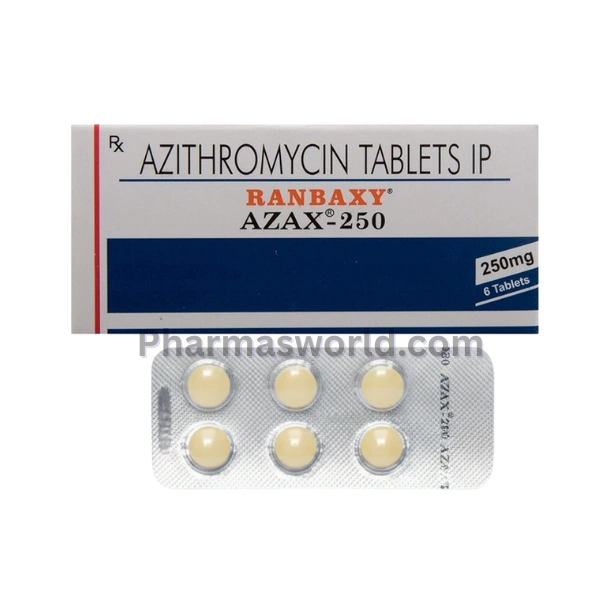
Azax 250 Mg

Azax 250 Mg

Price range: $18.57 through $51.60

Azax 250 Mg is an azithromycin 250 mg antibiotic tablet used for certain bacterial infections of the sinuses, chest, ears, skin, and some sexually transmitted infections when prescribed. Azax 250 Mg is often taken as part of a short 3 to 5 day plan, which many people find easier to finish. Take it exactly as directed, avoid aluminum or magnesium antacids around your dose, and call a clinician if symptoms are not improving after a couple of days or if you develop severe diarrhea, rash, or trouble breathing.

USA Brand Name Zithromax
Strength 250mg
Generic Name Azithromycin
Manufacturer Sun Pharmaceuticals, India

Azax 250 Mg

Variant Price Units Quantity Add to Cart
24 Tablet/s $18.57 $0.77
48 Tablet/s $35.97 $0.75
72 Tablet/s $51.60 $0.72

Limited Offer
20% Discount
PW20
Share:f𝕏win
🚚 Free Delivery🔄 Easy Returns✅ Genuine
Medically Reviewed By

Dr. Emily Carter

Senior Clinical Pharmacist

View Profile →
📋 Product Description
Azax 250 Mg is an azithromycin 250 mg tablet that helps treat specific bacterial infections when your clinician decides an antibiotic is needed. If you’ve been dealing with a stubborn sinus infection, a chest infection with worsening cough and fever, an ear infection, or a straightforward skin infection, your prescriber may reach for azithromycin because it’s typically taken for a shorter time and is generally well tolerated.

What Azax 250 Mg is used for

  • Acute bacterial sinusitis and certain ear infections
  • Community‑acquired bronchitis or pneumonia (mild to moderate), particularly when atypical bacteria are suspected
  • Uncomplicated skin and soft‑tissue infections caused by susceptible organisms
  • Some sexually transmitted infections (for example, azithromycin 1 g has been used for chlamydia; many clinicians now prefer doxycycline—your prescriber will choose)
  • Traveler’s diarrhea in select cases per clinician guidance

How it works in simple terms

Azithromycin is a macrolide antibiotic. It slows or stops the growth of bacteria by blocking protein production, which allows your immune system to clear the infection. As bacterial load drops, fever, pain, cough, and drainage typically improve.

How to take it (follow your exact label)

  • Common 5‑day plan: 500 mg on Day 1, then 250 mg once daily on Days 2 to 5 (sometimes dispensed as a “Z‑Pak”).
  • Alternative 3‑day plan: 500 mg once daily for 3 days.
  • For certain conditions your prescriber may use a single 1 g dose or other schedules.
  • Take at the same time each day with a full glass of water. Tablets can be taken with or without food; a light snack may help if you feel queasy.
  • Avoid aluminum or magnesium antacids 2 hours before and after your dose; they can reduce absorption.

What to expect

  • Many people start to feel better within 24 to 48 hours. Keep taking it on schedule until the course is finished, even if symptoms improve early.
  • If you are not improving after 3 days, or your fever is rising, reach out to your clinician.
  • It’s normal not to “see” anything in stools—focus on symptom relief and your follow‑up plan.

Safety notes you should know

  • Allergies: do not take if you’ve had a serious reaction to azithromycin, erythromycin, or other macrolides.
  • Heart rhythm: azithromycin can affect the QT interval. People with known rhythm problems, low potassium or magnesium, or who take other QT‑prolonging drugs should discuss risks first.
  • Liver: rare liver problems can occur. Call for dark urine, severe fatigue, right‑upper belly pain, or yellowing of eyes/skin.
  • Severe diarrhea: watery or bloody diarrhea can signal C. difficile–associated diarrhea. Do not self‑treat with anti‑diarrheals; seek care.
  • Myasthenia gravis: symptoms can worsen. Let your prescriber know your history.

Common side effects

  • Nausea, stomach upset, diarrhea, abdominal pain
  • Headache, dizziness, taste changes
  • Mild rash or itching
Most effects are mild and pass. Get urgent care for hives, swelling of lips or tongue, trouble breathing, chest pain, fainting, or a widespread blistering rash.

Drug and food interactions

  • Antacids with aluminum/magnesium: separate by at least 2 hours.
  • Warfarin: INR can change; clinicians often check a little more closely.
  • Other QT‑prolonging drugs (amiodarone, sotalol, some antidepressants, antipsychotics, fluoroquinolones): review with your clinician.
  • Digoxin or cyclosporine: levels may change; may need monitoring.
  • Azithromycin has fewer CYP3A4 interactions than clarithromycin, but it’s still smart to review all prescriptions, OTC products, and supplements.

Practical tips that help

  • Set a phone reminder so doses aren’t missed.
  • Hydrate, rest, and use supportive care (humidifier, saline spray, acetaminophen/ibuprofen if approved).
  • For strep‑like sore throats, replace your toothbrush 24–48 hours after starting antibiotics.
  • Do not share antibiotics or keep leftovers for future illness.

Available strengths in the market

  • Azithromycin tablets: 250 mg, 500 mg
  • Oral suspension: commonly 100 mg/5 mL and 200 mg/5 mL (helpful for children or those who dislike tablets)
  • Extended‑release suspension: 2 g (single‑dose for specific indications)
  • IV formulation: 500 mg (clinical use)
Your clinician will match strength, dose, and duration to your diagnosis and health history.

Storage and handling

  • Store tablets at room temperature, dry, away from heat and light.
  • Keep out of reach of children and pets.
  • If you have a liquid suspension, follow the label for shaking and storage; some versions do not require refrigeration.

Helpful search phrases people use

Azax 250 mg azithromycin, Z‑Pak dosing, antibiotic for sinus infection, bronchitis vs pneumonia treatment, azithromycin interactions, QT prolongation risk, azithromycin with antacids, how long azithromycin takes to work, azithromycin side effects.

FAQs

How should I take Azax 250 Mg if I was told “Z‑Pak style” dosing?

Many 5‑day plans use 500 mg on Day 1, then 250 mg once daily on Days 2–5. Follow your exact label and finish every dose, even if you feel better early.

Can I take Azax 250 Mg with food and antacids?

You may take tablets with or without food. If you use aluminum or magnesium antacids, separate them by at least 2 hours from azithromycin to avoid reducing absorption.

How quickly will I feel better?

Some improvement often shows up in 24–48 hours. If symptoms are not improving by day 3, or if they worsen, check in with your clinician for next steps.

Is azithromycin safe with my other heart medicines?

It depends. Azithromycin can affect heart rhythm in some people and can interact with other QT‑prolonging drugs. Share your full medication list so your clinician can confirm safety.

What side effects should make me stop and call right away?

Stop and seek care for hives or swelling, trouble breathing, chest pain or fainting, severe or bloody diarrhea, yellowing eyes/skin, or a widespread blistering rash.
size24 Tablet/s, 48 Tablet/s, 72 Tablet/s
Reviews

Reviews

There are no reviews yet.

Be the first to review “Azax 250 Mg”

Your email address will not be published. Required fields are marked *

Related Products

Cetzine Tablet

Cetzine Tablet

Price range: $35.46 through $89.71
Moxmod 500 Mg

Moxmod 500 Mg

Price range: $14.40 through $33.12
Azithromycin 500 mg

Azithromycin 500 mg

Price range: $125.00 through $365.00
Azifast 500 Tablet

Azifast 500 Tablet

Price range: $19.89 through $49.14